
Urdu Rich Text Editor formatting guide
The Urdu Rich Text Editor combines Roman Urdu transliteration with document-formatting tools. Type first, select the text you want to change, and then apply a format from the toolbar.
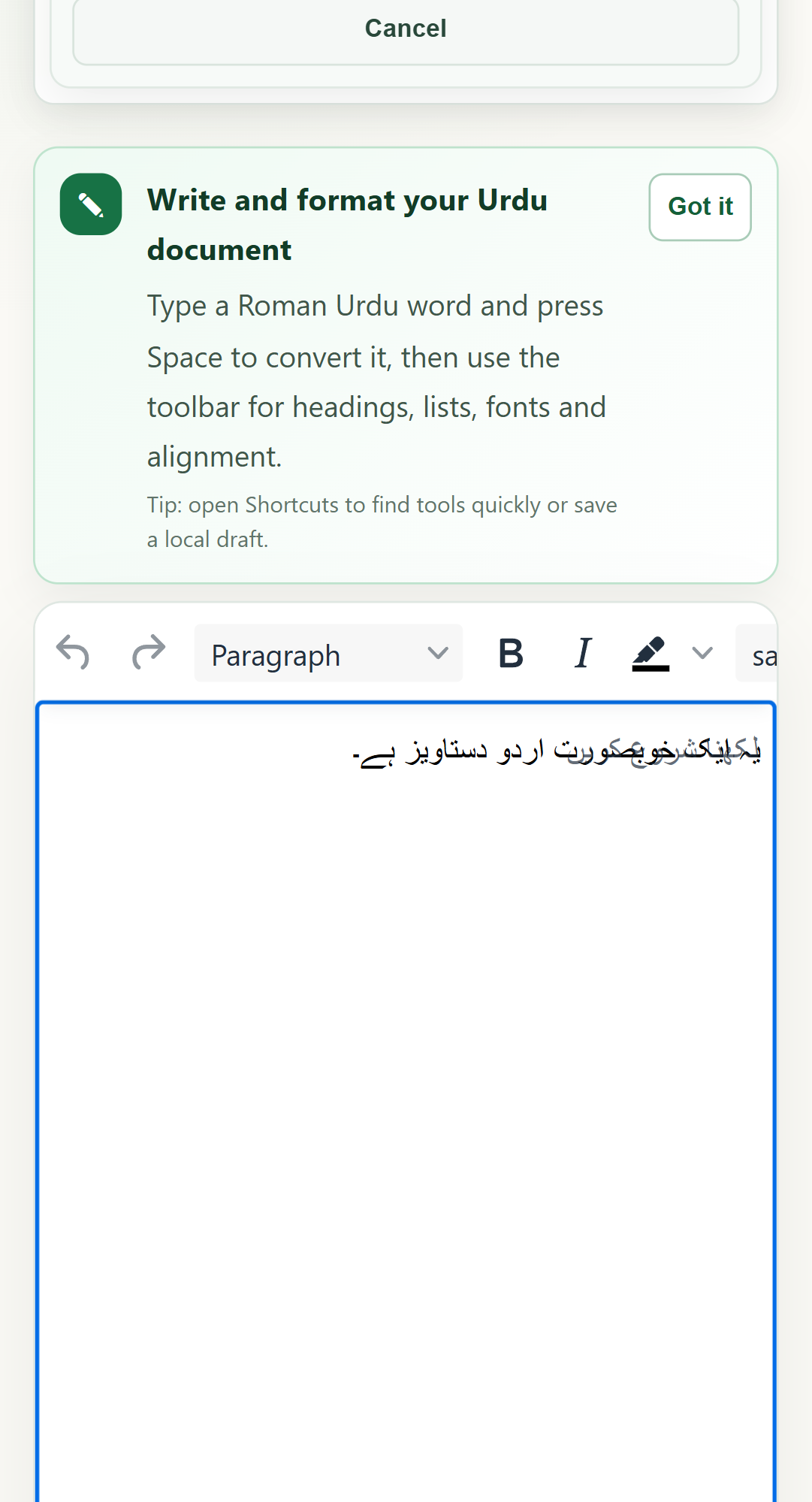
1. Change the text colour
Colour can distinguish headings, quotations or important terms. Use it sparingly to keep the document easy to read.
- Type your Urdu text and select the words you want to change.
- Open the Text colour control in the toolbar.
- Choose a colour from the palette.
2. Highlight text
A highlight adds colour behind selected text and can draw attention to a key sentence or reminder.
- Select the text you want to highlight.
- Open the Background colour or highlight control.
- Choose a colour; select the reset option when you want to remove the highlight.
3. Apply bold, italic, underline or strikethrough
Select text, then choose the relevant toolbar button. Bold adds emphasis, italic provides a secondary emphasis, underline draws attention, and strikethrough marks text as removed while leaving it visible.
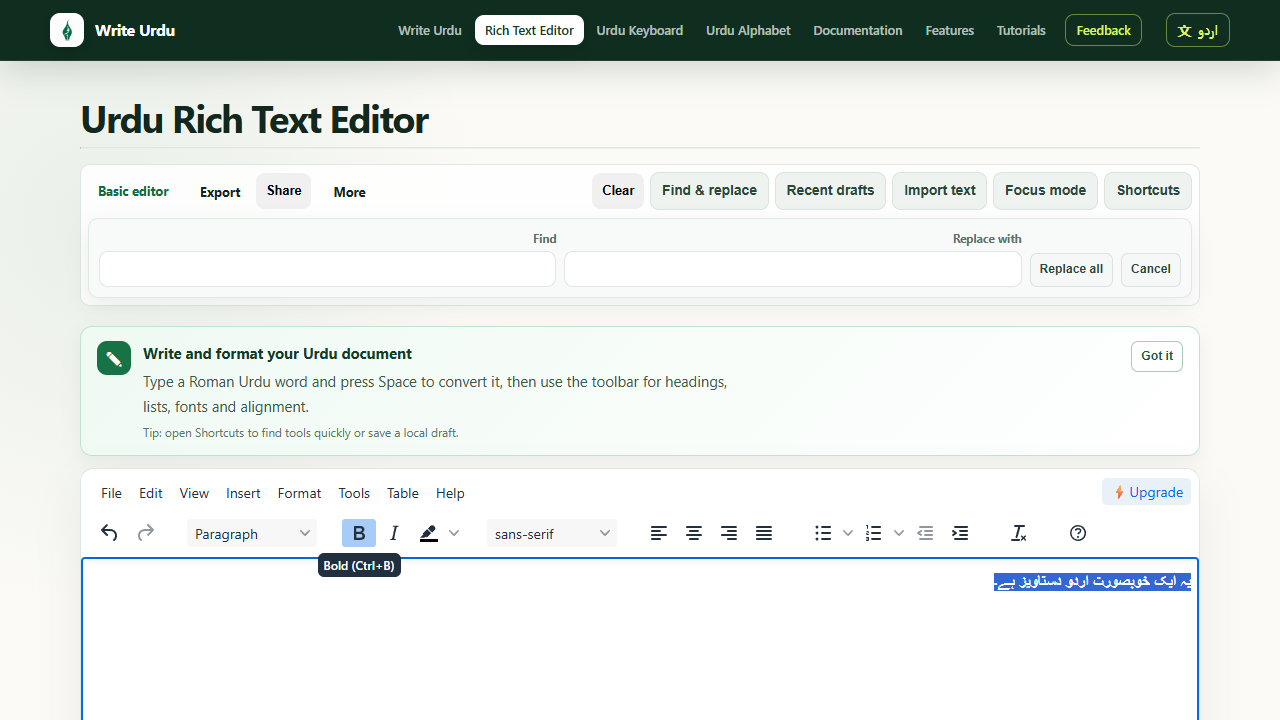
4. Undo and redo changes
Undo reverses your most recent edit. Redo restores an edit that you just undid. You can also use Ctrl+Z and Ctrl+Y on supported keyboards.
5. Choose an Urdu font
Different typefaces suit different purposes. Nastaliq provides a traditional flowing style, while Naskh is often clearer at smaller sizes and in interface text.
- Select the Urdu text you want to restyle.
- Open the font-family menu and choose an available font.
- Check the result at the intended reading size before exporting.
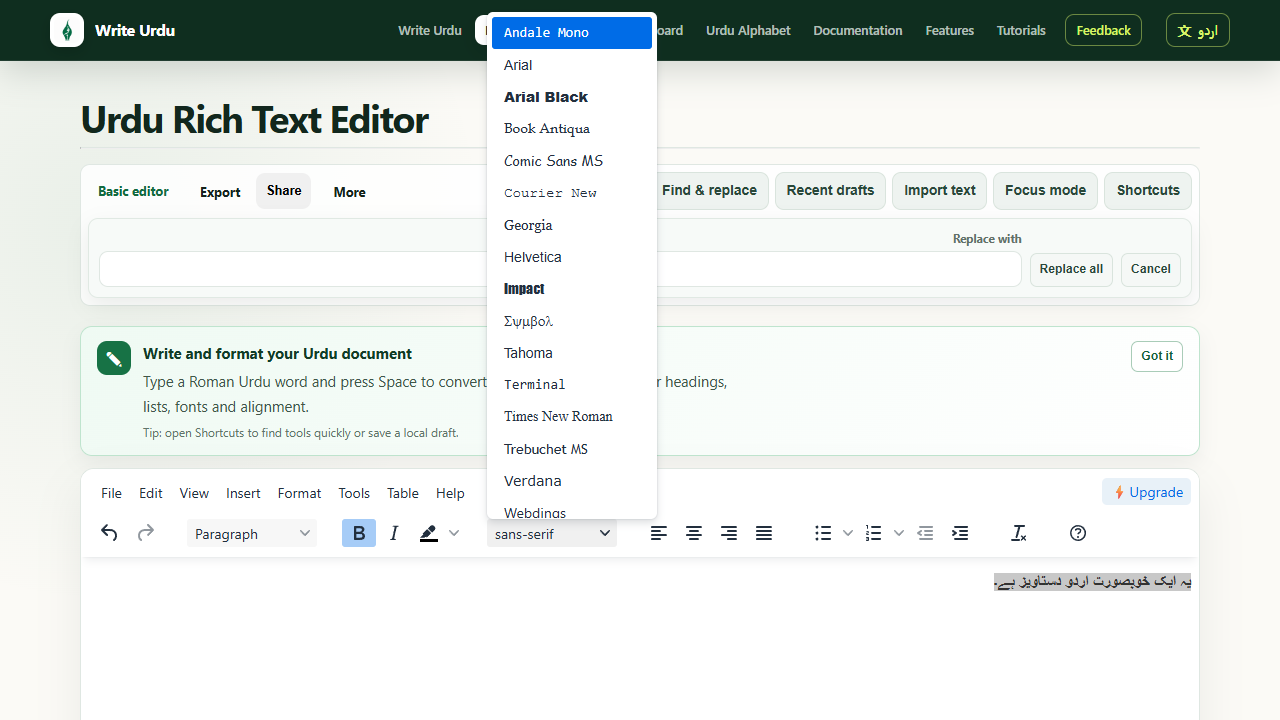
Available Urdu-friendly fonts include
- Noto Nastaliq Urdu
- Noto Naskh Arabic
- Qadreeregular
- Amiri
- Harmattan
- Katibeh
- Lateef
- Scheherazade
- Tajawal
6. Change the font size
Use larger sizes for headings and smaller sizes for supporting text, while keeping every line comfortable to read.
- Select the text.
- Open the font-size menu next to the font-family control.
- Choose a size and review the spacing around the updated text.